


Among many urological diseases, cystitis in women is the most common pathology.The etymology is due to damage to the upper mucous layer of the inner walls of the bladder by the inflammatory process.Sometimes the submucosal and muscular layer is involved in the damage process, causing changes in the tissue structure of the organ and disruption of its functions.
Women are much more likely to suffer from cystitis (up to 80% of all patients).This is due to the peculiarity of the female anatomical structure of the urethral canal.It is wider and shorter than the male urethra, which does not cause difficulties for infectious agents.
The clinical picture of the disease can manifest itself in an acute or chronic course, with various symptoms and signs.
Causes of cystitis
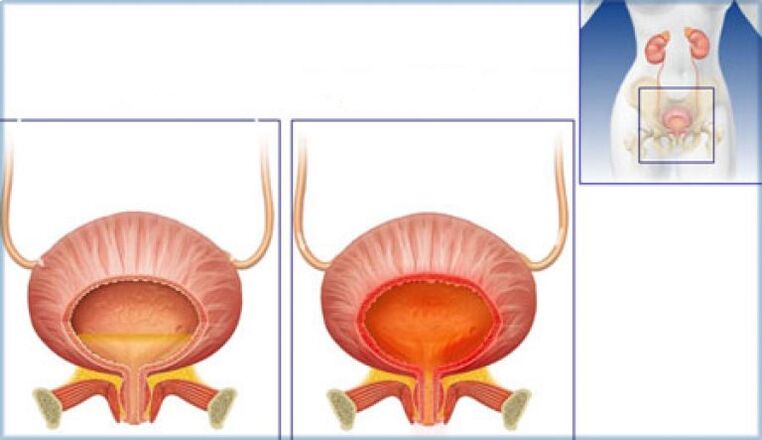
Cystitis itself belongs to the classification of infectious diseases.Its genesis is associated with bacterial carriers: coliform bacteria (in 70%), spherical staphylococci and other bacteria.The main role in the occurrence of cystitis in women is given to the spread of infection from possible lesions in the body:
- In the underlying organs (various forms of vulvovaginitis);
- Descending route with the flow of urine from foci of inflammation in the kidneys and the upper parts of the ureter;
- Hematogenously by promoting the pathogen (through the bloodstream).
Often, acute cystitis in women develops as a result of structural underdevelopment of the urinary system or oncological neoplasms, which create an obstacle to the normal process of urine output, contribute to its acute retention in the urinary system and the development of infection.
The development of pathology is influenced by various factors that contribute to a decrease in the overall resistance (resistance) of the immune system:
- Acute and chronic infectious diseases in history (previously suffered) - inflammation of the appendages, fallopian tubes or ovaries, acute or purulent pyelonephritis, inflammation of the urethra;
- Hypothermia and prolonged sedentary work;
- Conditions and diseases that reduce immune protection (pregnancy and diabetes);
- Chronic foci of infection - sore throats, rhinitis or caries;
- Immunosuppressive drugs, stress and instability of the nervous system;
- Back injuries;
- Early sexual relations;
- Neglect of hygiene;
- Age factor.
Forms of cystitis and features of manifestation
Cystitis in women can manifest itself in various forms, due to morphological changes in the cavity wall of the bladder.
- Catarrhal pathology is characterized by hyperemia and swelling of the mucous layer of the organ membrane, provoked by the action of the inflammatory process.
- In the hemorrhagic form, bleeding areas of damage appear on the mucous membrane.There is an increase in red blood cells and gross hematuria (dark or red urine).
- In the necrotic (ulcerative) form, deep depressions in the form of grooves are noted that penetrate into the muscular tissue of the membrane.
- The follicular form of the disease is characterized by tuberosity of the mucous layer, caused by the formation of follicular tubercles under the mucous membrane, which do not change the cavity surface itself.
- Fibrous appearance - the surface of the mucous layer is covered with a purulent or fibrin film of whitish or purple color.The walls of the bladder become inflamed, the upper lining of the cavity becomes denser and wrinkles.
- Bullous cystitis is manifested by prolonged excessive redness and significant accumulation of infiltrate (swelling) of the upper layer of the inner lining of the bladder.
- Polypous manifestation is characterized by a long-term inflammatory process that provokes the development of polyps on the mucous layer and in the cervical area of the organ.
- In cystic pathology, under the layer of mucous membrane of the bladder, single or group cystic neoplasms are formed, filled with lymphatic tissue and surrounded by modified epithelium.
- The encrusting type of pathology is characterized by a long course.A characteristic symptom is the formation of phosphate deposits (encrustations) on the walls of the bladder cavity, which subsequently contribute to the formation of stones.The transformation of carbamide (urea) into alkali occurs due to the fault of bacterial microorganisms capable of metabolism.
Signs and symptoms of cystitis in women
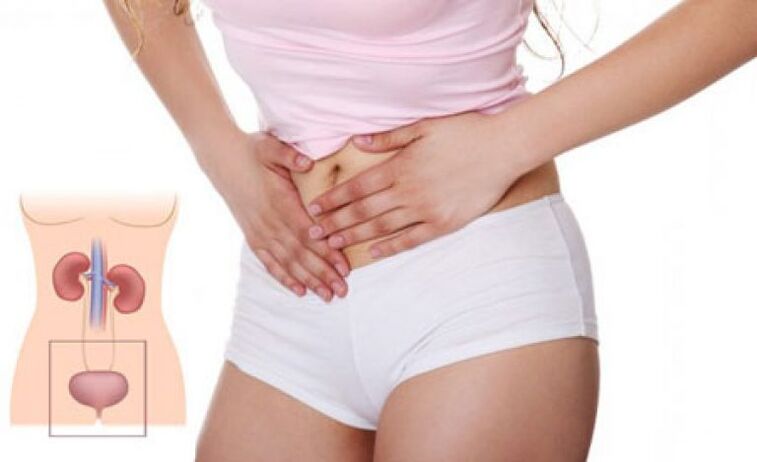
Vivid symptoms of cystitis and pronounced signs of the disease in women are observed in acute cases, accompanied by general intoxication (malaise, weakness, chills, vomiting or nausea, a slight rise in temperature).
When the disease, after remission (apparent recovery), periodically recurs (more than 2 times a year), it enters the chronic stage.Symptoms of chronic cystitis in women may be less pronounced.
The processes of inflammation alternate with the stage of remission and acute clinical course.Cystitis in remission does not show external signs and symptoms.When the disease worsens, many characteristic symptoms appear:
- Increased urge to urinate (every 20 minutes);
- Pain, burning and stinging along the urethral tract at the time of urine output;
- Pain in the suprapubic area (can be an independent symptom or accompany the release of urine);
- Unpleasant odor and cloudiness of urine, the formation of flakes, purulent or blood clots in it;
- Feeling of residual urine in the urine bag;
- Pain in the lumbar and renal region;
- Enuresis (urinary incontinence) may develop.
Chronic cystitis in womenhas various signs of the clinical course of the disease.
- The latent course is stable, with rare or frequent exacerbation processes.Symptoms are “erased” or completely absent.
- The persistent type is manifested by symptoms characteristic of chronic pathology.In this case, the functions of the urinal are not impaired.Alternating remission and exacerbation, signs of bleeding inside the organ are possible.
- The interstitial course is characterized by stable painful signs of manifestation with significantly pronounced symptoms.There is a spread of inflammation deep into the tissues, a disorder of the reservoir function (enuresis).This is the most severe type of disease.
With timely treatment, the disease can be dealt with quickly, otherwise complications cannot be avoided.
Possibility of complications
Lack of treatment, or incorrectly selected therapy, leads to relapse and complication of the disease:
- The transition of inflammatory processes into the muscular structure of the bladder wall - the development of an interstitial type of pathology.
- Ascending spread of infection, affecting the overlying organs of the urinary system, which contributes to the formation of associated background pathologies - damage to the renal pelvis, purulent inflammation of the kidneys, etc.
- Intraperitoneal rupture of the bladder (not excluded) with subsequent formation of peritonitis.
Cystitis - which doctor should a woman contact?
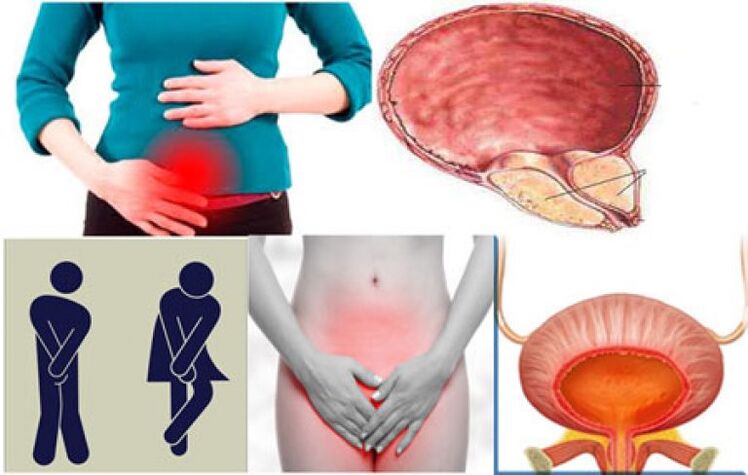
If signs of the disease appear, you must consult a urologist to confirm the diagnosis.It is this doctor who solves urological problems.
To exclude the consequences of STDs, you need to consult a gynecologist.You may need a smear of vaginal flora, which will help identify the disease and determine its stage of development.
Diagnostics - identifying the disease
To identify the disease, various types of diagnostic examination are used, from express diagnostics to conventional examination methods, including:
- examination of blood and urine parameters;
- identification of hidden inflammatory processes in the urinary system;
- diagnosis of infectious diseases using PCR analysis;
- tank-seeding for flora - detection of UPM (bacteria);
- identification of underlying diseases - ultrasound of the genitourinary system;
- analysis for vaginal dysbiosis;
- biopsy;
- endoscopic examination of the internal cavity of the bladder (cystoscopy).
How to treat cystitis in women?- drugs and medicines

How quickly cystitis in women can be cured depends on a correctly drawn up treatment protocol.Treatment tactics include various therapeutic techniques.
Drug therapy involves the prescription of appropriate antibiotics for chronic cystitis in women to suppress concomitant infections - a class of cephalosporins and a combination of protected penicillins.
They are prescribed immediately, without waiting for the pathogen to be identified, with subsequent adjustment of the drugs.
The main treatment is tableting.When treating cystitis in women, tablets are prescribed to relieve symptoms.These include anti-inflammatory and immunomodulatory agents, antispasmodics and uroseptics based on nitrofurans and sulfonamides.As an additional treatment, antispasmodics and natural uroseptics (herbs, herbs, etc.) can be prescribed.
Specific drugs are prescribed purely individually.Since many of them have a number of contraindications and restrictions on their use.Treatment will be complete if you follow a gentle regimen and a balanced diet, since diet plays an important role.
- it is necessary to drink more liquid (still water, juices);
- more foods containing vitamin C;
- exclude from the diet smoked meats, spices, fried foods, dishes rich in potassium (dishes made from cottage cheese, cheese and milk);
- Alcohol is not allowed.
Measures to prevent cystitis
To prevent relapse of the disease, you should strictly adhere to the recommendations of your doctor.Basic rules:
- avoid hypothermia and prolonged sitting;
- consume up to 1.5 liters.fluids per day;
- avoid stagnation of urine (do not endure the urge);
- during intimacy, use protection methods;
- do not neglect personal hygiene (especially during the menstrual cycle).
Following these simple rules will protect you from re-treatment of the disease.